PLANTS | ANIMALS | ECOLOGY | FUNGI | GEOLOGY | GARDENING | TOOLS
MEXICAN PLANTS & ANIMALS HOME

Excerpts from Jim Conrad's
Naturalist Newsletter
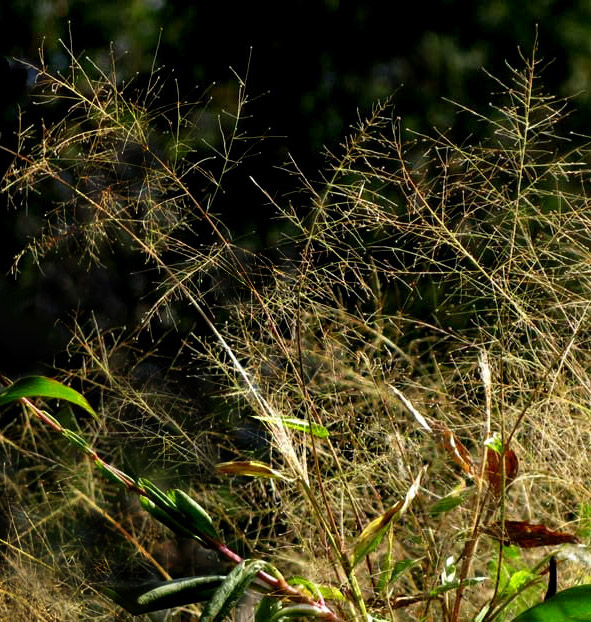
from the February 20, 2011 Newsletter issued from Hacienda Chichen Resort beside Chichén Itzá Ruins, central Yucatán, MÉXICO; limestone bedrock, elevation ~39m (~128ft), ~N20.676°, ~W88.569°
TROPICAL PANICGRASS
The other day as I dug a knee-deep hole into black soil, collecting it for potting plants, a breeze blew into my pit the light-weight, diffuse item shown below:
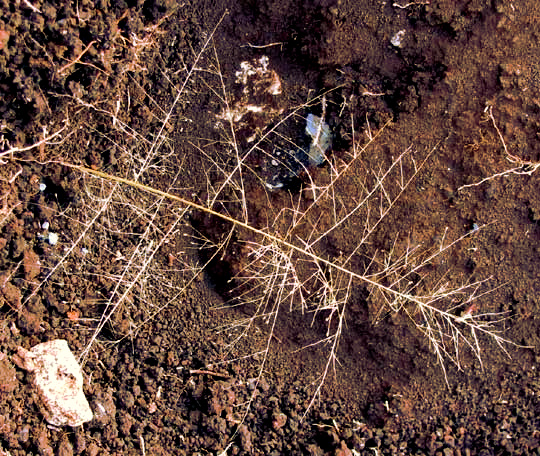
That's a grass's flower/fruit cluster, or inflorescence. About twenty feet upwind I saw the drying-out cluster of grass stems the inflorescence had blown from. You can see those dying-back stems at the top of this page.
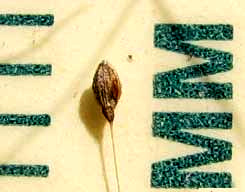
With a handlens I looked at the tiny "floret" shown above. Florets are grass flowers. The one in the picture is 1mm long (±1/25th of an inch) and is unusually small. In fact one name for the plant is Smallflowered Panicgrass, though the name Tropical Panicgrass seems to be more common. It's PANICUM TRICHOIDES, with members of the genus Panicum collectively being referred to as panicgrasses -- because species in that genus array their flowers in panicle-type inflorescences.
So, why did this grass evolve such tiny flowers in such diffuse flower clusters? The inflorescence that blew into my black-dirt hole tells us the answer. When inflorescences easily snap from their stems, wind blows them across fields, transporting the tiny fruit-grains to new places. The panicle's diffuse form and tiny flowers is a wind-dissemination adaptation similar to that practiced by tumbleweed, except that tumbling tumbleweed consists of the whole plant rolling across the land, while here we just have the inflorescence.
Tropical Panicgrass appears to be native tropical American, but now it's found as a weed in disturbed tropical areas nearly worldwide. I was able to identify it only because it's included in the online Flora of North America, for it's been documented growing in southern Texas.