PLANTS | ANIMALS | ECOLOGY | FUNGI | GEOLOGY | GARDENING | TOOLS
MEXICAN PLANTS & ANIMALS HOME

Excerpts from Jim Conrad's
Naturalist Newsletter
from the February 25, 2006 Newsletter written at Hacienda San Juan Lizárraga one kilometer east of Telchac Pueblo, Yucatán, MÉXICO and issued from Hotel Reef Yucatan 13 kms to the north
ORIOLES OF NORTHERN YUCATAN
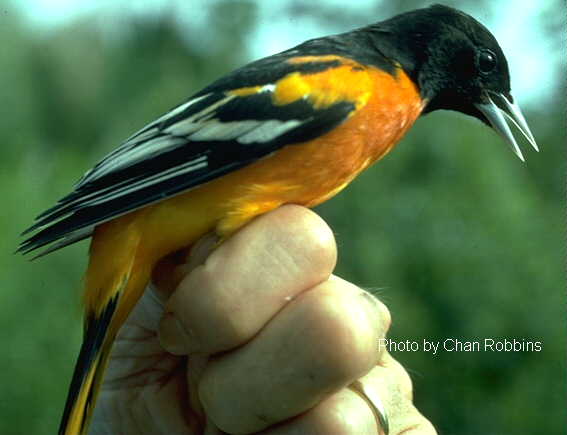
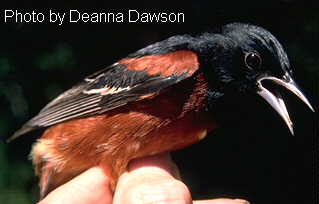
By "orioles" I mean members of the bird genus ICTERUS, in the Family Icteridae. That family is a big one embracing not only orioles but also meadowlarks, blackbirds, grackles, cowbirds and the Bobolink. Orioles are brightly colored birds with bold patterns of orange or yellow with black and usually some white. In North America, except locally along the Mexican border, orioles are strictly summer residents who migrate south for the winter. In North America the best known orioles are the Orchard and Baltimore in the East, and the Bullock's in the West.
North America's orioles overwinter in Mexico and farther south. Mexico is home to about eleven oriole species. Because of the several species and the fact that the orioles' female, juvenile and first-year plumages are often similar, in the field it can be hard to impossible to identify certain individuals to species level. The birder just hopes to see a mature male singing, for the differences between songs and mature males' plumages usually are great enough to enable solid identifications.
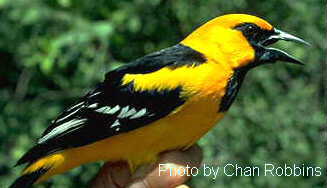
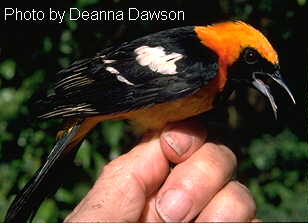
At Hacienda San Juan two permanent-resident species are seen and heard in equal abundance each day at this time of year, and they are so similar that at first it's hard to distinguish them. The Altamira Oriole is larger and usually has an orange wing patch, while the smaller Hooded Oriole lacks the patch and has a slightly curved upper bill. Though these features are often hard to note in the field, the birds' songs are very different.
In this area we also have the uncommon and endemic Orange Oriole. I saw it last year at Komchén but so far not here. It lacks the black back of the Altamira and Hooded but otherwise looks pretty much like them.
Howell's field guide indicates that in this area we also host Yellow-backed and Yellow-tailed Orioles as permanent residents, but I've not seen them at the hacienda. Orchard and Baltimore Orioles migrate through here, wintering farther south. Just a bit farther inland, to the south, Black-cowled Orioles turn up.
Orioles keep a birder here head-scratching much of the time. You just need to look at every individual to make sure it's one of the common ones, and in the process you see more Altamiras and Hoodeds than you really want to.
But, all the species are so gaily colored and musical that you don't really mind. Seeing a brightly orange, black and white bird in a glossy, dark-green tree with the deep blue sky behind, all animated with windblown boughs or fronds and the graceful flittings of the orioles themselves... what could be more agreeable?
If you want to see our orioles and just imagine how much fun they are to be with, here are some links: