PLANTS | ANIMALS | ECOLOGY | FUNGI | GEOLOGY | GARDENING | TOOLS
MEXICAN PLANTS & ANIMALS HOME

Excerpts from Jim Conrad's
Naturalist Newsletter
from the September 21, 2007 Newsletter issued from Sierra Gorda Biosphere Reserve, QUERÉTARO, MÉXICO
BRAZILIAN PEPPER TREES GONE WILD
A narrow gravel road beyond town led a few kilometers down a descending valley with a modest stream flowing in its bed. Brazilian Pepper Trees had spread from town down the valley and they were in flower. In the Mexican uplands you can't miss this species because it's planted abundantly as street trees and often escapes into natural areas. Leaves and flowers are shown below:
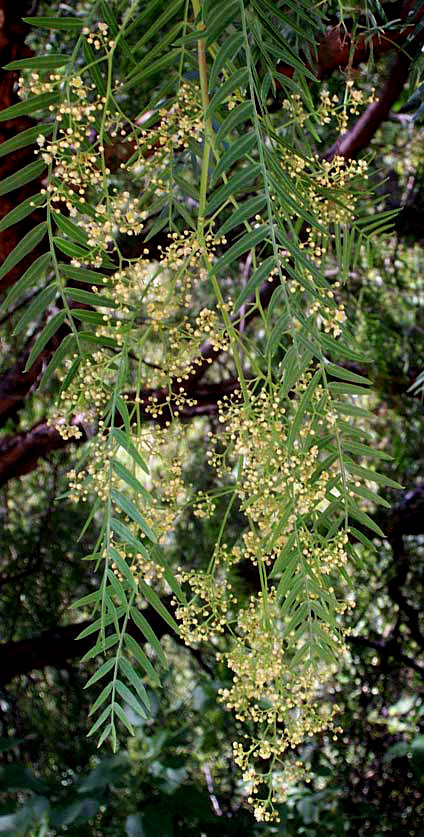
Brazilian Pepper Trees are SCHINUS MOLLE and belong to the same family as do Poison Ivy and the sumacs, the Anacardiaceae, usually known as the Cashew Family. If you think about it, sumacs have pinnately compound leaves like the pepper tree's in the picture, and dense clusters of pale, tiny flowers as well. BB to pea-size, rose-colored fruits develop from the flowers. The tree's drooping, limber branch-tips and feathery leaves are distinctive. The leaves are aromatic when crushed. Male flowers occur on one tree, female on another (plants are dioecious).
entry dated May 12, 2022, issued from near Tequisquiapan, elevation about 1,900m (6200 ft), ~N20.57°, ~ W99.89°, Querétaro state, MÉXICO
BRAZILIAN PEPPER TREES FRUITING
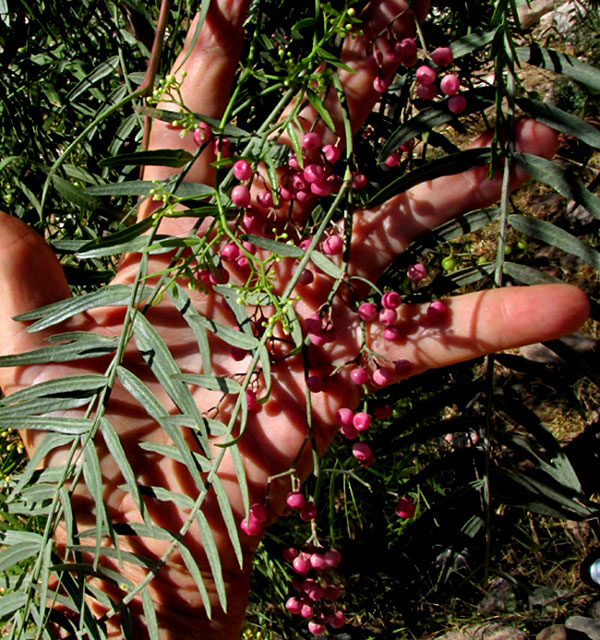
Now at the end of the dry season, before any rains have come, Brazilian Pepper Trees are both flowering and fruiting, as shown above. In this species, usually trees bear only male or only female flowers; they're generally dioecious. Below you see a female flower:
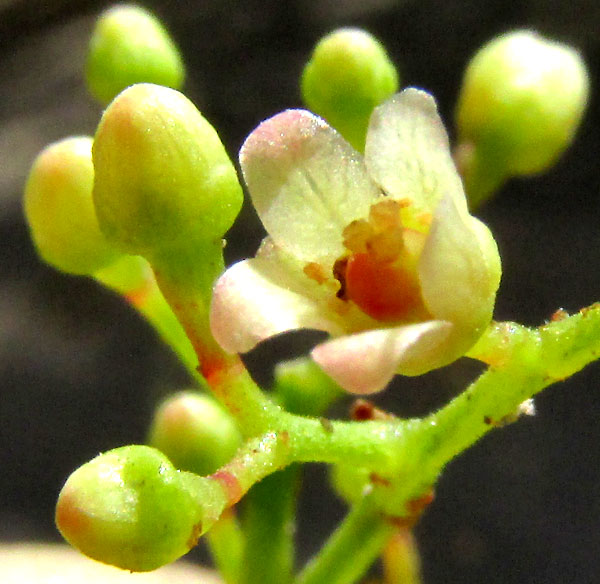
Inside the open flower the spherical ovary, already turning reddish, bears three stigmas. Arising from the base of the ovary you can barely see some small, vestigial stamens which don't produce viable pollen. Compare those with the ones in the next picture, a male flower from a different tree:
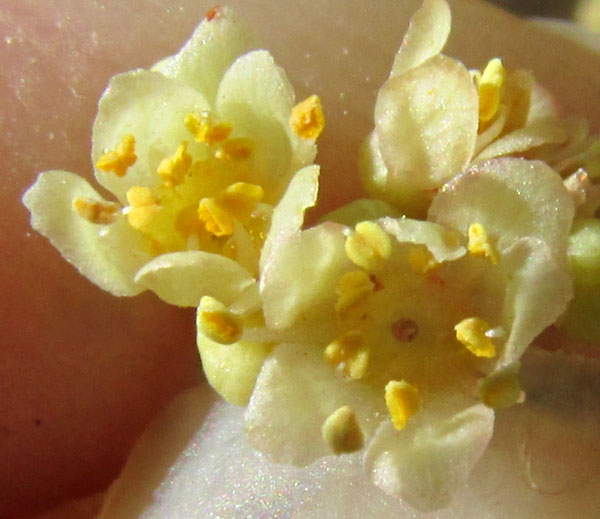
In the above flowers, the ovary is vestigial, unable to produce fruits, the much larger stamens are producing plenty of viable, yellow pollen.