(SOURCE: NCBI database)
KINGDOM: Fungi
DIVISION: Basidiomycota
CLASS: Agaricomycetes
ORDER: Phallales
FAMILY: Phallaceae
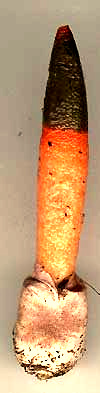
The Dog Stinkhorn at the left, Mutinus caninus, which is 5 inches high (13 cm), is neither rare nor common in eastern North America and Europe, and spottily elsewhere. Usually it's found in small groups in leaf litter, dead wood and wooded roadsides, in both deciduous and coniferous woods. The one in the picture emerged from deep mulch in an organic garden.
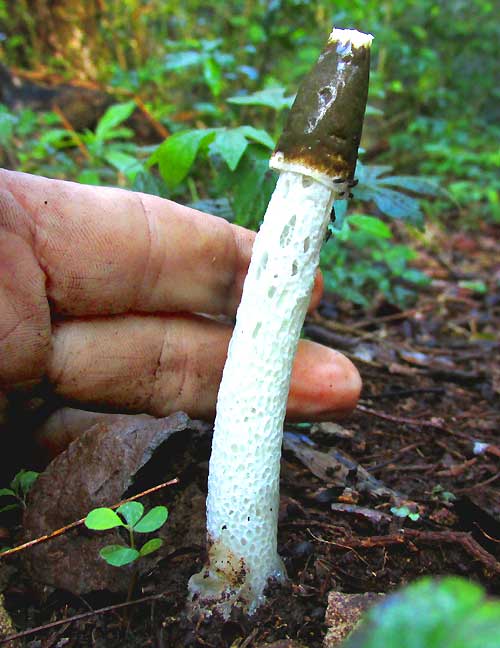
The majestic feature of stinkhorns is that they stink, like dead bodies and animal poop. The odor attracts flies and ants, who perform the service to the stinkhorn of carrying away on their feet the sticky, stinky goo full of the fungus's reproductive spores. The stink is at the heart of the fungus's reproductive strategy.
In 2008 it was estimated that the family contains 21 genera and 77 species. At the right is another species photographed in tropical Mexico where fungi are not well studied. It looks like the North's Common Stinkhorn, Phallus impudicus, but in the tropics there may be a look-alike species.
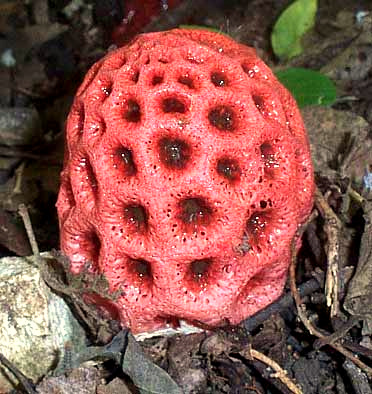
Not all stinkhorns are horn-shaped, as the "Wiffleball Stinkhorn, Clathrus crispus, at the left shows. That species stinks like the others, similarly tricking flies, ants and the like into carrying their spores away. Mainly it occurs in Mexico and the Caribbean, but in the US makes it into Florida and along the Gulf Coast.
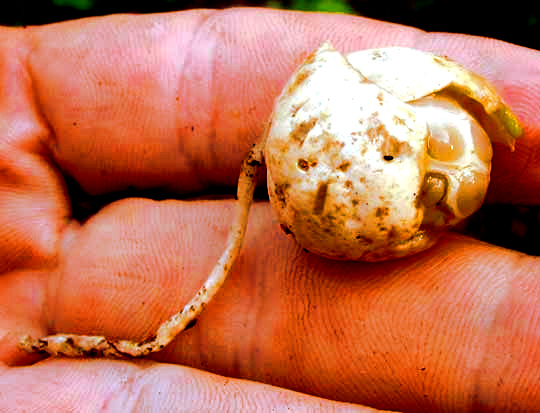
Despite the variability in stinkhorn appearances, all species in the Stinkhorn Family, the Phallaceae, begin their development as oval or round structures known as "eggs." The egg of a Wiffleball Stinkhorn is shown at the right.