Here are some thoughts about looking for plants and animals "ecologically":
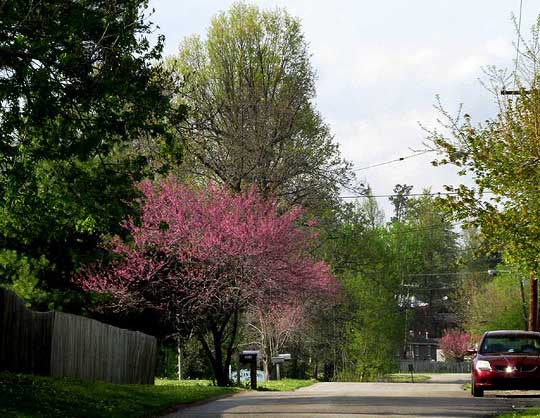
- In urban areas pay special attention to parks, botanical gardens, zoos, cemeteries, and any area heavily treed or with gardens of ornamental plants - - places where flowers and fruits may be attracting interesting insects, birds, and other creatures. Be sensitive about appearing to be a snoop in such areas, however, and ask permission where appropriate. Sometimes national wildlife refuges are close to urban areas.
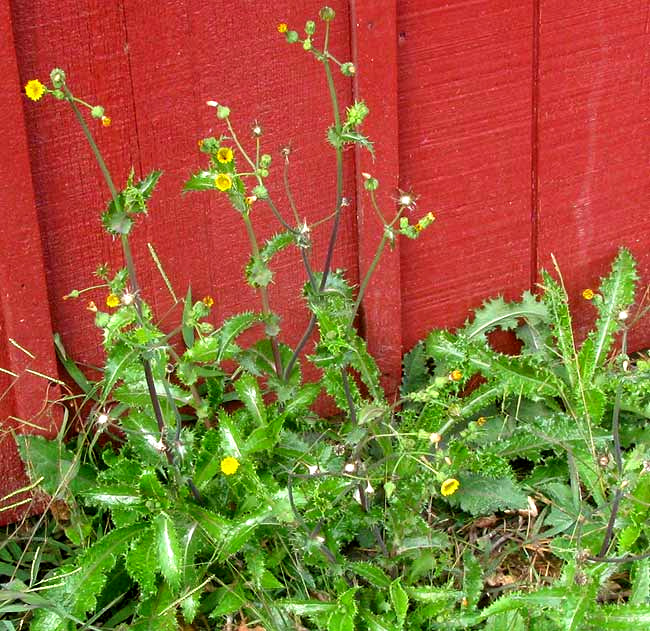
- In cities and towns, keep in mind that wild animals need what we do -- food and shelter. At the left, in early winter, a Prickly Sow Thistle, Sonchus asper, finds refuge at the base of a tool shed's sun-warmed, Equator-facing wall. Away from the wall, freezing temperatures had killed herbaceous annual plants. When you scan an urban landscape, if you spot a tree, bush, or patch of weeds producing flowers or fruits, take special note. Insects swarm around and into flower clusters, and birds flock after the insects. Garbage dumps often attract scavengers such as sea gulls and vultures, and even occasional mammals such as raccoons.
- Any weedy, bushy area may be rich in animals. However, in urban areas they may also be dangerous. Use your best judgment when visiting such places. Flashing a pair of nice binoculars in the wrong place can be fatal. Traveling in groups is sometimes a good idea.
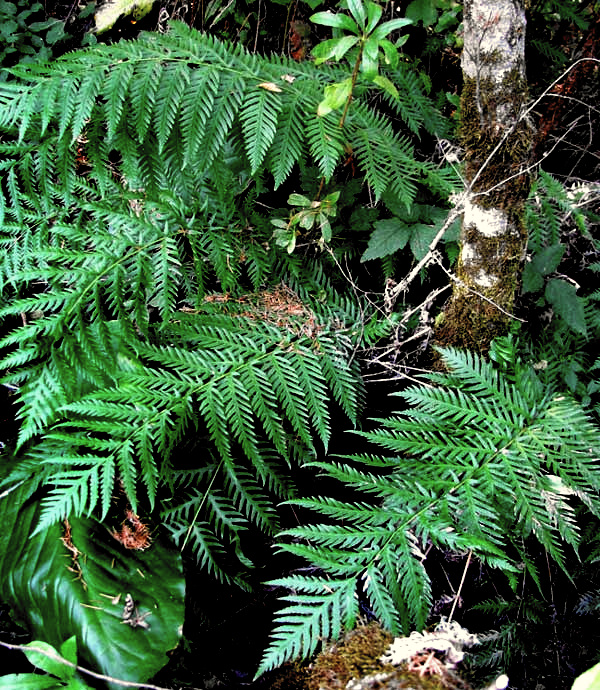
- Plant and animal species in forested parks where the ground is kept clear for picnicking are far less diverse than forested parks where wildflowers and bushes are allowed to create a lush undergrowth. At the right, the Giant Chain Fern, Woodwardia fimbriata, needing mild, wet forests, grows amid very thick, lush, shaded vegetation.
- Habitat type often changes drastically depending on whether a site is lowland, highland, or on a slope. Deep in a moist, shaded valley, both plant and animal species are likely to be different from those atop dry, windswept and sun-drenched ridges and hilltops. Often slopes between the two extreme habitats offer yet a third completely different set of conditions.
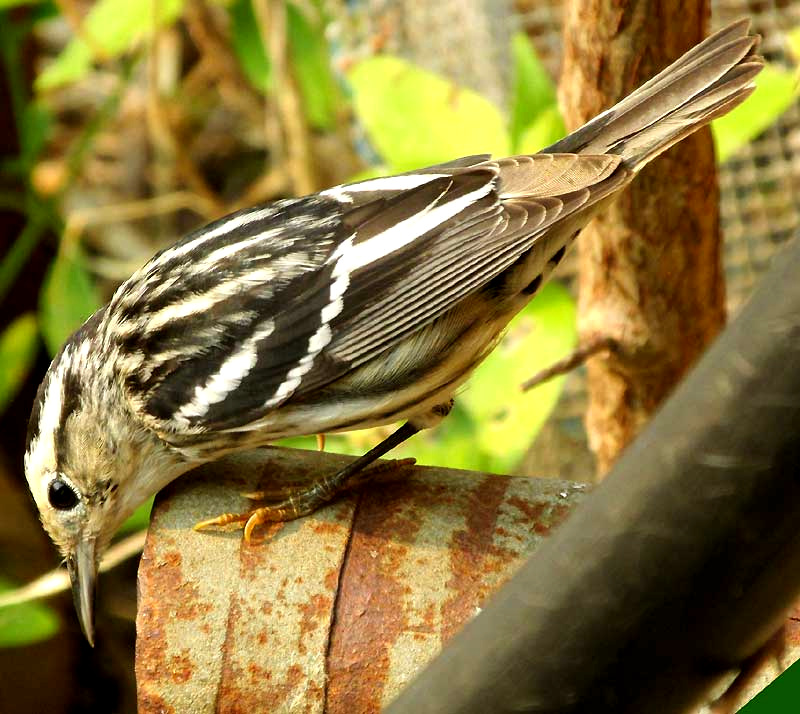
- In trees, certain species are most likely to be found among the lower branches, others at mid level, and still others among the uppermost limbs. The Black-and-white Warbler, Mniotilta varia, at the left, when not drinking from a drainage pipe, normally hops up and down tree trunks and large limbs like a nuthatch or woodpecker.
- Plant and animal species in a city lot abandoned for one year are different from those of a similar lot abandoned for several years, where bushes and small trees may have appeared. When visiting abandoned areas, note the various "stages of abandonment," and search for different species in each.
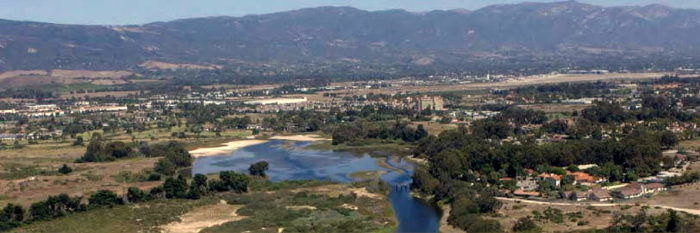
- Many organisms prefer low, flood-prone areas -- everything from soggy spots or shallow pools in sports fields and agricultural fields, to natural swamps and marshes. Wetlands always deserve special attention -- and protection.
- Usually a narrow ribbon of special wetland habitat, with its own plants and animals, occurs on land immediately next to a river, lake, or the ocean.
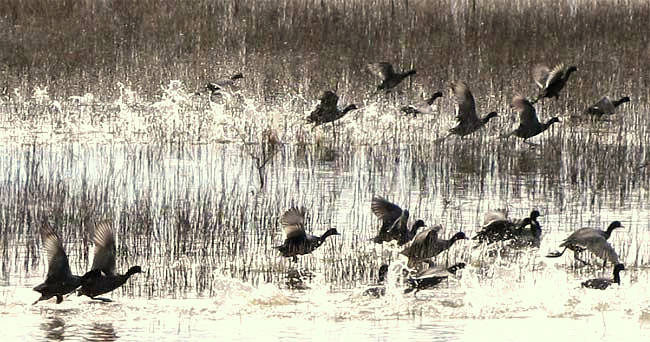
- In bodies of water, a special habitat with its own community of plants and animals exists along shore wherever the water is shallow enough for aquatic plants such as water lilies to root themselves, and still have access to sunlight. Ducks, grebes and the American Coots, Fulica americana, shown below, especially like this zone.
- In larger bodies of water, aquatic species vary in their preferences for the distance they remain from shore. Therefore, don't forget to look far out into the water.
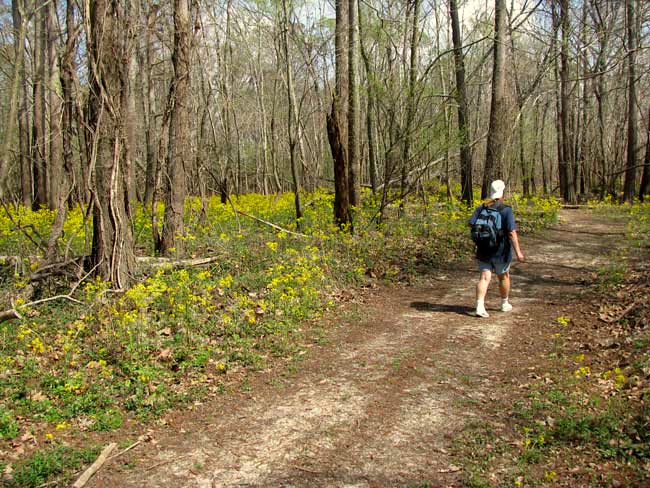
Butterweed, Packera glabella, covering floor of bottomland forest