 March 17 1988
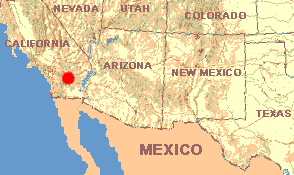
CALIFORNIA: San Bernardino County
Off CA Hwy. 247 about 15 miles north of Yucca Valley
March 17 1988Not until last night's darkness came and the valley below filled with glimmerings of security lamps and car headlights did I realize that we had settled on a perch. On Henry's three high sides lie large boulders but I have a good view toward the north. Even knowing how densely the valley below is populated, during the day gazing down there you don't see much of people, and the view calms the spirit.
Upon this peaceful perch many wildflowers are blossoming. I'm a little surprised at this. At 3000 feet we're higher than we've usually been during this trip, and thus we should be "going backwards toward winter." But the wildflowers say that this is the most springy place we've been.
Now, if we could see the landscape from fifty feet in the air, maybe three-fourths of the ground between boulders would be naked soil. No Joshua-trees are here but a smaller yucca relative is common. Appropriately, it's called the Mojave Yucca, Yucca schidigera. Though not-yet-blossoming, Creosote-bushes are present. The main woody shrubs, however, are two species of two-foot-tall bushes that look very similar until studied from just inches away -- they're Burro-bush, Ambrosia dumosa, and Blackbrush, Coleogyne ramosissima. The latter is just beginning to flower with curious yellow blossoms about half an inch wide, bearing many stamens but no petals.
One of the two inconspicuous species of cactus here is our seventh species of the cholla group, the Diamond Cholla, Opuntia ramosissima. It's a rather low, slender cactus with diamond-shaped designs on its skin. The other cactus, similar to our earlier Blind Pricklypear in Big Bend, is the spineless Common-beavertail, Opuntia basilaris.
Here various wildflower species frequently grow together in lush, green communities two to six feet across and surrounded by naked sand. Also they grow among shrubs' outstretching branches. Probably this latter location protects them from browsing deer. One-fourth of the Mojave's plant species are endemic -- in the whole world found only in the Mojave Desert.
Here is a list of the wildflowers found within fifty feet of Henry, in the order in which I find them.