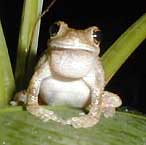
The best-known amphibians are frogs, toads, and salamanders. Compared to the classes of other higher animals -- animals with backbones -- amphibians are thought of as primitive creatures.
AMPHIBIAN EVOLUTION
According to the fossil record, here is approximately when the major groups of land animals appeared:
Birds...... about 160 million years ago
Mammals.... about 210 million years ago
Reptiles... about 315 million years ago
Amphibians: about 380 million years ago
Fish....... about 480 million years ago
Life originated in the seas. The first animals were simple ones without backbones -- "invertebrate" animals such as segmented worms, sponges, and corals. The first fish were so simple that they didn't have jawbones for opening and closing their mouths. The first land animals with backbones were the amphibians. The oldest amphibian fossils look like fish with thick, muscular fins. That's because amphibians arose from early fish. The first amphibians lived more in water than on dry land.
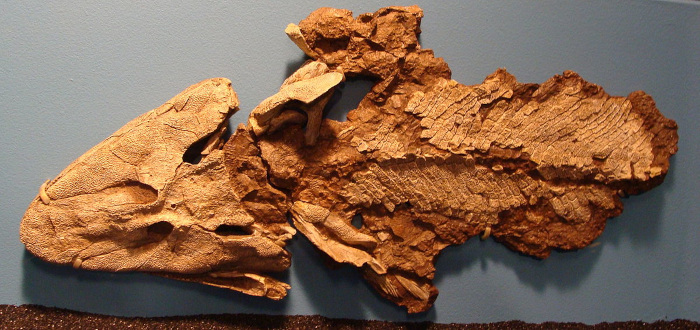
From an evolutionary viewpoint, amphibians as a class developed before many of nature's most useful animal "inventions" had appeared. For instance, look at what amphibians don't have (and this includes today's amphibians):
WHAT AMPHIBIANS CAN'T DO
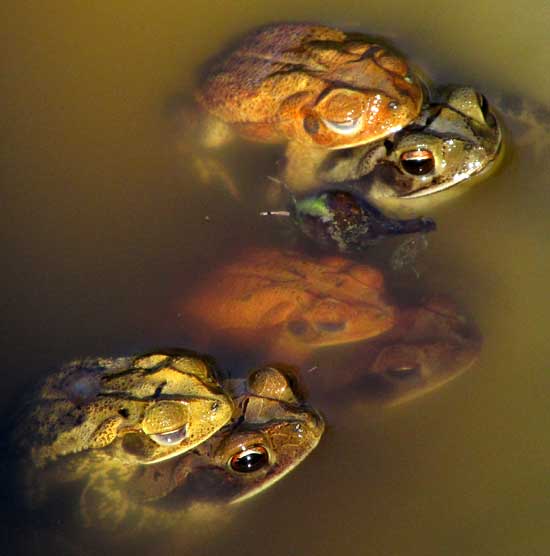
- Like the mating Gulf Coast Toads, Bufo valliceps, at the right, they can't reproduce on dry land. As with their fish ancestors, amphibians must have to water to reproduce, at least a little. When amphibians arose, Nature hadn't yet "invented" eggs with shells that could keep the eggs from drying out. Amphibian eggs must be deposited in water, or at least a film of water. In most species, female amphibians lay gelatinous eggs in water, and then the male deposits clouds of sperm over them. We have a special Frog Reproduction page.
- Order Anura (frogs & toads)
- Order Caudata (salamanders & sirens)
- They can't retain water well in their bodies. Scales, which cut down drastically on water loss from skin, didn't appear until reptiles arose millions of years after the first amphibians. This is another reason why amphibians need to stay near water.
- They can't keep their bodies warm during cold weather. Amphibians are "cold blooded." When the air cools, so does their body temperature. This causes the animal to become sluggish, which can be bad if a predator is near. We think of reptiles as being cold-blooded, but some evidence suggests that certain dinosaurs were "warm blooded," like the reptiles' descendents, the birds and mammals.
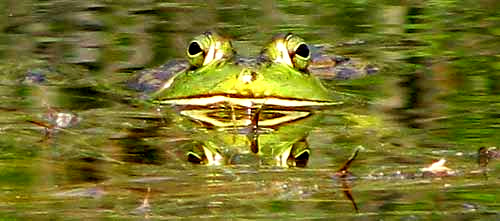
AMPHIBIAN ORDERS
FOUND IN NORTH AMERICA
To see a more complete breakdown visit the American Museum of Natural History's Amphibian Species of the World page
THE WATER PROBLEM
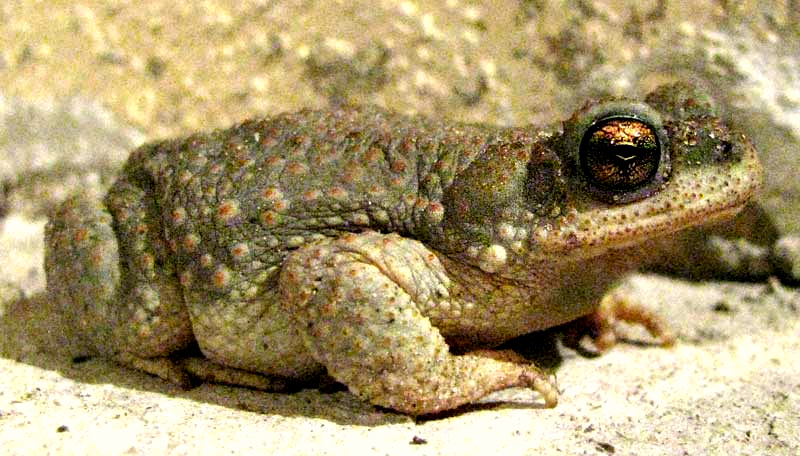
In most backyards, toads are the most likely of all amphibians to appear. That's because toads have a special adaptation that helps them range farther from water than other amphibians: Their thick, warty skin -- seen on the Red-spotted Toad, Bufo punctatus, at the right -- keeps water inside the toads better than other amphibian skins.
Because water and air so easily flow into and out of amphibian skin, amphibians are much more vulnerable to pollution in water and air than other higher animals. In fact, today amphibian numbers are collapsing all over the world. Acid rain is thought to be responsible for amphibians disappearing from streams, lakes and ponds where they were common only a few years ago. Nowadays we often hear of two-headed or five-legged frogs. Apparently this high frequency of deformity results from pollutants interfering with natural development at the genetic level. Of course, as pollution levels increase, eventually other kinds of animals, even humans, are sure to suffer similar fates.
ON THE WEB

- EVOLUTION: Major events during the gradual evolution from fish to amphibians are described fairly well on the Wikipedia Amphibians Page, Evolution section
- IDENTIFICATION: If, for instance, you identify a Spring Peeper and want to confirm your identification and know more about the species, Amphibiaweb provides a searchable database where you can type in the Spring Peeper's name (Pseudacris crucifer in Latin), and be presented with a picture of the species, as well as links to much more information. You also might benefit from browsing through the California Reptiles & Amphibians website.
- CLASSIFICATION: At Amphibian Species of the World there's a searchable database where you can generate lists of amphibian species present in different countries.
- GETTING INVOLVED: In the US you can participate in monitoring frog populations in your area by visiting the site called Frog Web, and sign up to be an official frog-watcher!