PLANTS | ANIMALS | ECOLOGY | FUNGI | GEOLOGY | GARDENING | TOOLS
MEXICAN PLANTS & ANIMALS HOME

Excerpts from Jim Conrad's
Naturalist Newsletter
from the January 6, 2006 Newsltter written at Hacienda San Juan Lizarraga one kilometer east of Telchac Pueblo, Yucatán, MÉXICO and issued from Hotel Reef Yucatan 13 kms to the north
GULF COAST TOADS
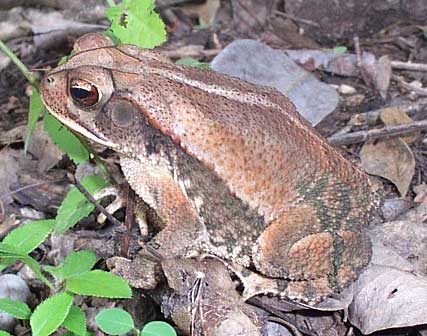
Gulf Coast Toads, BUFO VALLICEPS, are about the size and wartiness of an American Toad, just with some extra dark blotches. It's approximately as commonly encountered here as toads around an average farmhouse up north. The gardeners tell me that after the first big rain at the end of the dry season this toad emerges onto highways in delirium-tremens numbers, numbers that shake one's belief in nature's sense of modesty.
I am astonished at this species' variation in the ground color of its upperparts. Normally it's gray, like a good toad's, but I've seen brownish forms and rusty-orange ones and I've read about yellowish tan and reddish brown ones. The species lives from the southern US to Costa Rica.
At dusk if I wait too long to close my doors for the night a Gulf Coast Toad hops into the room. If I don't watch, I'll step on one in the grass, and I did that once to a Bufo americanus up in Kentucky. Remembering the crunchiness beneath my instep still makes my toes tingle.
Our toads are thinning out now, now that the dry season is showing its serious side, occasionally even imparting to the air the acrid odor of ashes -- an odor that later will be a continual presence, day and night, week after mind-scorching week -- for the campesinos can't forget their traditional role of cinderizers of the landscape. Their ancestors practiced sustainable slash-and-burn with long periods between crops so the land oould recuperate, but now population density is so high that there's little or no resting period for the land, just daily slash, and yearly burn.
Heat and ash come, toads and greenness go. One stares toward upcoming weeks of heat and glare and the soul blinks dumbly.