Anthropologists often speak of the great ancient cultures of Mexico and Central America -- the Mayas, the Aztecs, and others -- as having developed while consuming the "triad" of foods, of corn, beans, and squash. In isolated Indian villages even today the variety of different kinds of corn, beans, and squash available is astonishing. There are basketball-size squashes with smooth, horny rinds, squashes a lot like our pumpkin, and everything in between. All of them are most typically cooked, all are in the gourd family, all are native American, and most of them are usually called calabaza
In most mercados, probably the most commonly encountered calabaza is young, tender zucchini, Cucurbita pepo. One squash, shown above, is so important to native American cultures that it has its own name -- Chayote. In Latin, Chayote is Sechium edule. That's Chayote below:
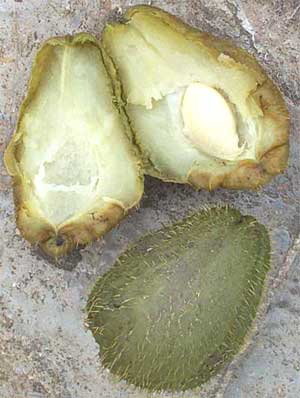
Though the chayotes in the picture are definitely armored with soft, blunt, short spines, other varieties are perfectly spineless. Sometimes chayotes are sold cooked by ladies carrying them in arm baskets, and they are delicious, tasting like potato. Even the seed is wonderful. Country folks typically plant chayote plants in their cornfields and the vines may scramble seemingly interminably among the corn plants. Young chayote-vine sprouts taste good, too.
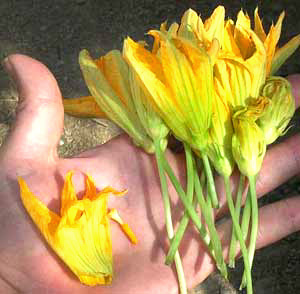
In some mercados, during the right time of year, you can buy squash flowers like those shown above. Mexicans especially like to put them into tamales.